When a pet parent walks into a clinic saying, "AI thinks this is Addison’s," the room gets noisier, not clearer.
That is the problem.
AI-generated diagnoses sound polished. They feel helpful. But for vets, they often create anchoring bias, diagnostic drag, and wasted consult time. The clinician now has to unwind the conclusion before they can assess the case.
What vets need is not the pet owner’s diagnosis. They need the signal:
- when it started
- how often it happens
- what changed
- what the pet is eating
- what the stool, skin, cough, or limp actually looked like
- what happened after meds, rest, or diet changes
That is structured data. And structured data beats AI noise every time.

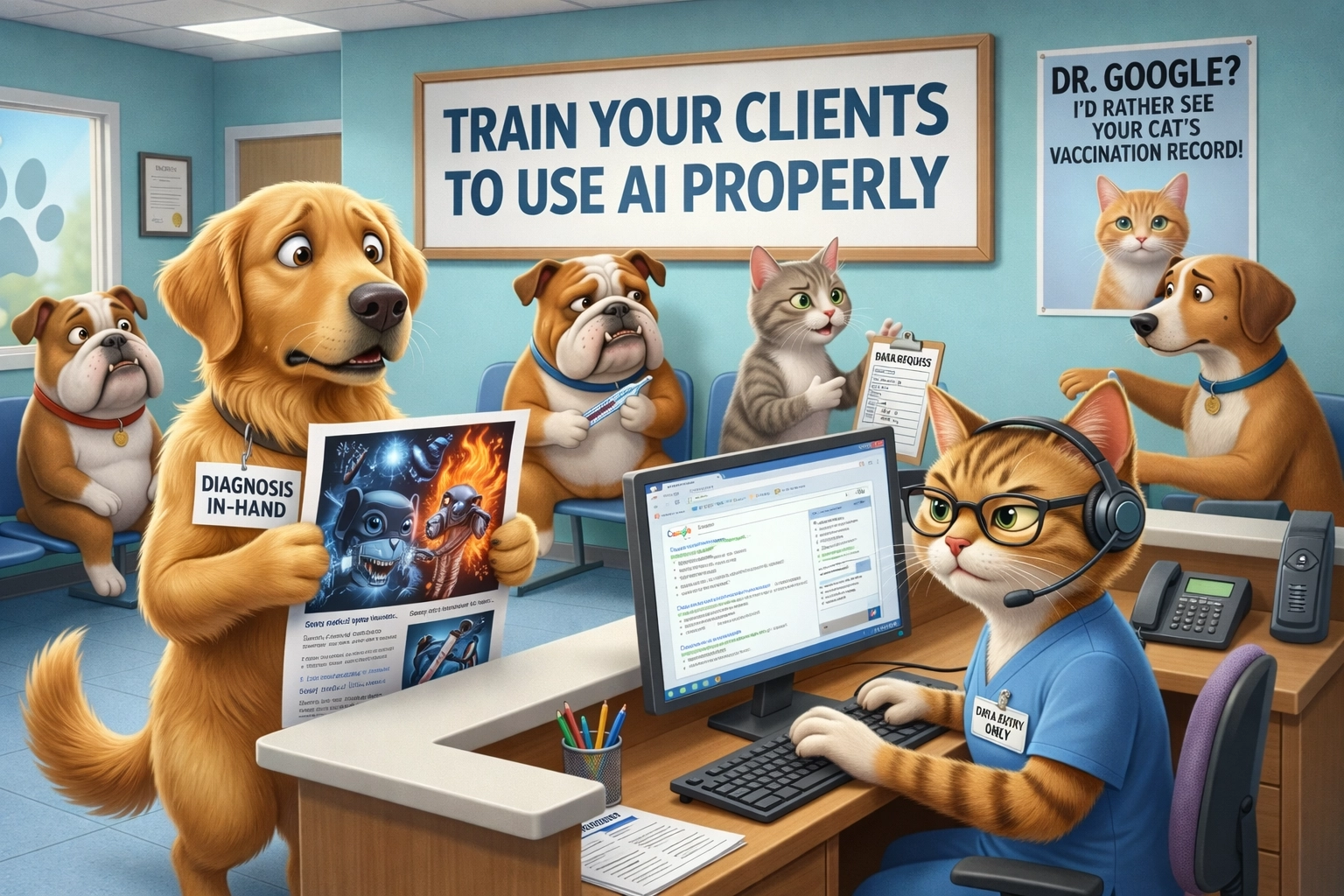
A Pixar-meets-The Far Side snapshot of the real issue: noisy guesses on one side, clean clinical signal on the other.
Signal Beats Noise
A guessed diagnosis narrows the conversation too early. A structured history opens it up.
That distinction matters.
When owners lead with "I think it’s allergies," "Reddit says pancreatitis," or "ChatGPT says lymphoma," the vet has to spend valuable minutes de-biasing the room. That is operational waste.
When owners lead with structured observations, the consult gets sharper:
- symptom onset
- frequency
- duration
- appetite shifts
- medication response
- photos and notes over time
Now the vet can think clinically instead of cleaning up inputs.
Why Vet Leaders Should Care
This is not just a communication issue. It is a throughput issue.
Every vague, AI-inflated story adds friction to the consult. Every structured pre-consult history removes it. That shift helps clinics:
- protect diagnostic quality
- reduce handoff errors
- reclaim consult minutes
- keep appointments focused on decisions, not data collection
Research and field experience point in the same direction: structured history-taking improves data quality and supports better decision-making than open-ended recall under pressure. In plain English—better inputs create better medicine.
By collecting structured history before the visit through pet.tailepet.com, clinics get the signal before the consult starts.

Direct Data Wins
Reception is busy. Hand-offs are messy. Verbal summaries get distorted.
Structured pre-consult collection lets pet parents send observations, notes, and photos directly into a clinical dashboard before the appointment. That reduces the broken-telephone effect and gives the vet cleaner context from the start.
This is especially valuable for talkative clients and talkative vets.
The best vets build rapport. They explain. They connect. Structured history does not remove that human side. It protects it. It shifts time away from repetitive fact-finding and toward interpretation, reassurance, and clinical decision-making.

The Strategic Takeaway
Train clients to use AI for organization, not diagnosis.
Tell them:
- do not bring the conclusion
- bring the timeline
- bring the frequency
- bring the photos
- bring the response to treatment
- bring the raw facts in a structured format
That is how you turn noise into signal.
That is how you help vets stay objective.
And that is how high-performing clinics protect both capacity and care quality.

Ready to Make Better Inputs the Standard?
If you lead a veterinary clinic, this is the play: stop letting AI-generated guesses hijack the consult. Train clients to submit structured history in advance so your team walks in prepared.
Unlock the power of structured data at taile today.
Frequently Asked Questions
Should pet owners stop using AI altogether?
No. AI can help owners organize observations and questions. The issue starts when AI outputs are treated like diagnoses. Vets need structured facts, not confident guesses.
What should clients submit before the visit?
Short, direct data points: onset, frequency, appetite, energy, vomiting, stool changes, medication response, and photos or notes when relevant.
Can my vet really see the photos I upload?
Yes. Photos, notes, and updates are organized into a clinical dashboard the vet can review before the appointment.
How do I get started as a pet owner?
Visit pet.tailepet.com to submit structured history, upload photos, and share the right signal with your clinical team.
Leave a Reply